
Let’s embark on our journey through the exciting world of photography where a complete understanding of the exposure triangle is crucial. Every photographer, from the beginner enthusiast to the experienced professional, must master the subtle dance of light and shadow to create stunning images. Imagine that every adjustment in your camera settings is like shifting one of the vertices of the exposure triangle: ISO, shutter speed, and aperture. In this article, we will discuss how these three elements influence the final result in a photograph and how they can be utilized to achieve the perfect composition. Ready for practical tips and unconventional applications? Then, let’s get started!
ISO: Sensitivity to Light
ISO is a parameter that defines the sensitivity of the camera sensor to light. The higher the ISO, the more noise you may encounter in your photo, which can degrade image quality, especially in darker areas. Typically, low ISO settings, such as 100 or 200, are used in bright lighting conditions to ensure good image quality without unnecessary noise. In situations where light is limited, consider increasing the ISO, for example, in night photography, to improve exposure without needing to lengthen the shutter speed. Remember that modern digital cameras handle high ISO much better than older models, so don’t hesitate to experiment with higher values.
Shutter Speed and Its Impact
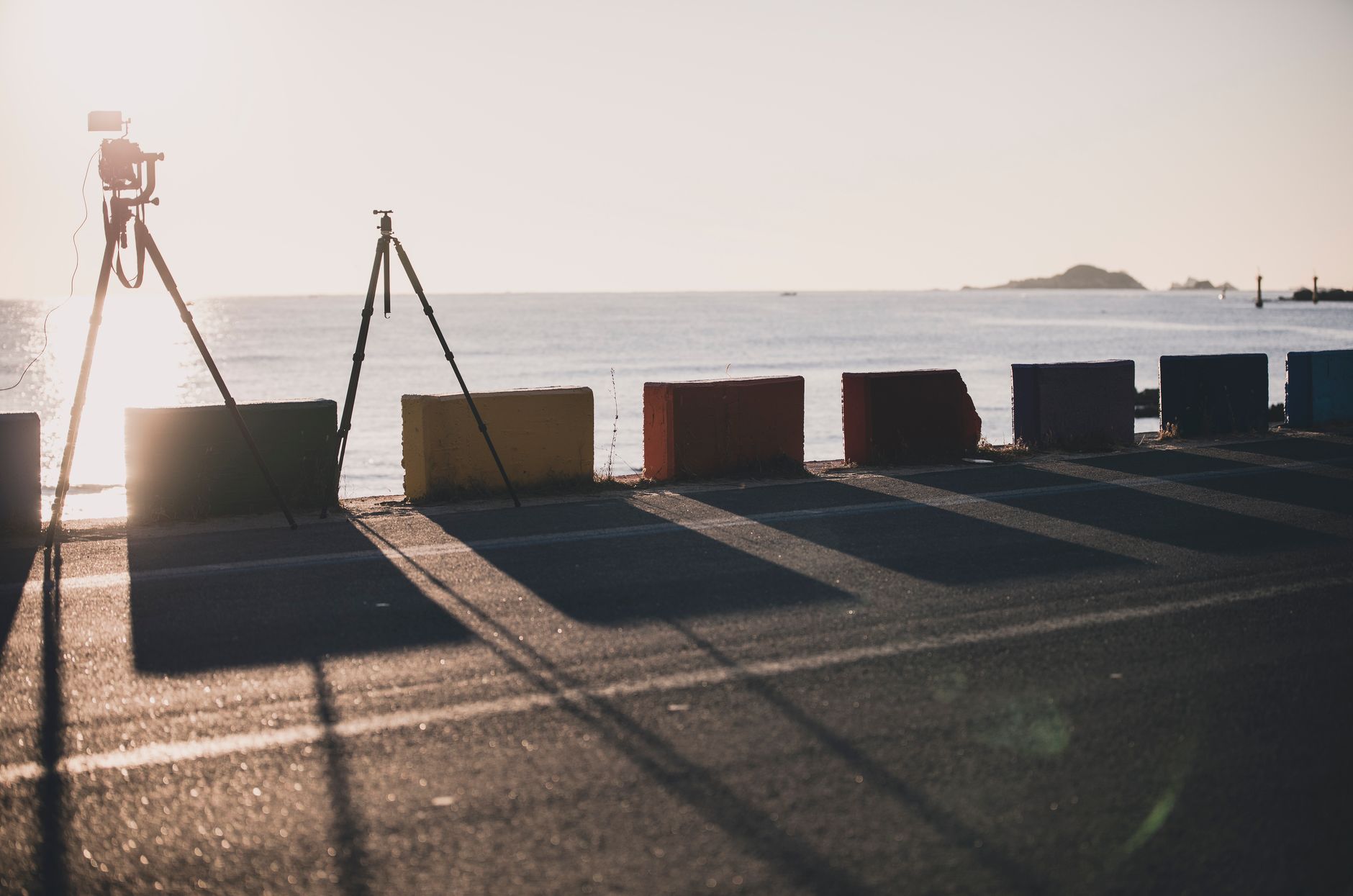
Shutter speed determines how long the sensor is exposed to light. A fast speed, like 1/1000 of a second, is great for freezing motion, such as in sports photography. Longer speeds, like 1/30 of a second, are excellent for landscape photography or low-light conditions but require a tripod to avoid blur. It is crucial to select the appropriate shutter speed according to the type of scene photographed; too long of a duration without proper camera support will result in image blur. Remember the reciprocity principle to adequately compensate for changes in shutter speed with adjustments to other settings.
Aperture: Control Over Depth of Field
Aperture, denoted by the letter 'f', controls the amount of light entering through the lens and also affects the depth of field. A low aperture value (e.g., f/1.8-f/2.8) means a wide-open aperture, allowing for a shallow depth of field, ideal for portraits with beautiful background blur. A closed aperture (f/8-f/16) increases the depth of field which is beneficial in landscape photography, providing sharp detail in both the foreground and background. However, a too-small aperture can lead to diffraction, which lowers the sharpness of the image.
Reading the Histogram: Understanding Exposure
A histogram is a tool that shows how shadows, midtones, and highlights are distributed in our photograph. By using the histogram, one can assess whether the photo is properly exposed. It is important to avoid too many pixels clustered on the left side (underexposure) or the right side (overexposure). Practicing reading the histogram allows for a better understanding of the trade-offs in the exposure triangle and adjusting camera settings to achieve optimal results.
EV Compensation and the ETTR Principle
EV (Exposure Value) compensation is a function that allows for slight adjustments to a photo's exposure without switching to full manual mode. Photographers often use this feature to subtly brighten or darken images in semi-automatic modes, such as Av (aperture priority) or Tv (shutter priority). The ETTR (expose to the right) principle involves maximizing the sensor’s dynamic range by pushing the histogram as far right as possible without overexposing details, allowing for the retention of rich information in RAW files.
Common Photography Scenarios
When photographing in different conditions, you must skillfully adjust the exposure triangle. For instance, an indoor portrait typically requires 1/200 s, f/2.8, and ISO 400 to capture details with the available light. For street photography on a sunny day, it is recommended to use 1/500 s, f/8, and ISO 200, while for sports, use 1/1000 s, f/4, and Auto ISO to freeze dynamic action. Landscape photography at sunrise might need settings of 1/30 s on a tripod, f/11, ISO 100 to maintain sharpness and detail. Each of these scenarios requires a different approach to exposure, providing excellent practice for beginners.

Common Mistakes and How to Avoid Them
Beginner photographers often make mistakes, such as relying on Auto ISO without setting an upper limit, leading to noise issues. Sometimes they open the aperture too wide when taking a group photo, resulting in a lack of sharpness for everyone. The histogram is often ignored, making it easy to miss underexposure or overexposure in photos. Concerns about high ISO are unfounded, especially with modern cameras. Confusing EV compensation with manual mode is also common—both have different uses and are important in various situations.
Semi-Automatic Modes and Advanced Techniques
Semi-automatic modes, such as Av (aperture priority) and Tv (shutter priority), are excellent compromises for beginner photographers, offering partial control over exposure while benefiting from the camera's automation. Back-button focus is an advanced technique where a special button on the back of the camera is used to set focus, enhancing the shooting of dynamic scenes. These functions provide greater flexibility and control without the need to switch to full manual mode.
How Picvelo Can Help
Picvelo simplifies the process of selecting and presenting photos. By using our platform, you can create beautiful client galleries and protect your work with watermarks, ensuring safety and professionalism in client interactions.
Summary
Remember that understanding the exposure triangle is a key skill for every photographer. Experiment with settings. Ready for the next step? Check out our training materials /.
FAQ
What is the exposure triangle?
The exposure triangle is a concept that represents the relationship between three parameters: ISO, shutter speed, and aperture, which affect the exposure of a photograph.
Why does high ISO increase noise?
High ISO increases the sensitivity of the sensor to light, which also amplifies noise and grain in the image, especially in older cameras.
How do you control depth of field?
Depth of field is controlled by the aperture; a wide-open aperture (low 'f' values) reduces depth, while a closed aperture (high 'f' values) increases it.
What is EV compensation?
EV compensation is a function that allows for exposure adjustments of photos without needing to fully change camera settings.
How do you read the histogram on a camera?
The histogram presents the distribution of brightness in the image, showing the amount of shadows, midtones, and highlights. It is important to avoid their clustering in the extreme parts of the graph.
Is manual mode better than auto?
Manual mode provides full control over exposure but requires knowledge and practice. Auto and semi-automatic modes are a good compromise for less experienced individuals.