
Newborn photography is an art that requires not only artistic talent but also a particular care for the safety and comfort of the little model. Properly preparing the photography studio is just as important as the photographer's skills. Do you know how to create a safe and friendly environment for newborns during a photoshoot? We have prepared a guide to help you understand the key elements of this process—from setting the right temperature in the studio to using the proper equipment and photographic techniques. Our article will guide you on how to take care of every detail so that both parents and their little ones feel comfortable and safe during the photo session.
The Importance of Temperature in the Studio
The temperature in the photography studio is crucial for the comfort of the newborn. The optimal temperature is between 25 to 28°C, allowing the baby to feel comfortable while preventing overheating. An improper temperature can lead to discomfort, crying, and, in extreme cases, health risks.
Investing in a good quality heater or air conditioning unit that can maintain the desired temperature precisely is worthwhile. It's also important to use a thermometer to regularly monitor the conditions in the studio.
Remember, thermal comfort affects the entire session—a calm and relaxed baby increases the chances of successful shots. You can also use warm blankets and pillows to provide additional comfort for the newborn.
Prioritizing the Newborn's Safety
The safety of the newborn during the session is absolutely fundamental. Never leave the baby unsupervised on an elevated surface—always ensure the presence of a parent or assistant, especially when using photographic props.
Keep in mind that some poses can be challenging for the delicate body of a newborn. Avoid complicated setups, like the 'froggy' pose, unless you are confident in your skills. You can always use the composite technique, combining two shots—one with the holding parent and one without, to achieve a safe final effect.
Set tripods low to minimize the risk of falls, and use soft pillows and baskets as bases for the baby.
Choosing the Right Photography Equipment
The equipment used in newborn photography should be tailored to the specifics of this field. A flash, even a low-powered one, can frighten the baby, making continuous LED lights a better choice, as they provide soft, constant light.
Focus on using equipment that allows flexible parameter settings, such as DSLRs or mirrorless cameras with additional lenses. Low tripods are essential—stability is key.
Pay attention to using apertures in the range of f/2.8 - f/5.6, as this allows for aesthetic background blur and sharpness on key details of the baby.
Props and Their Role in the Session
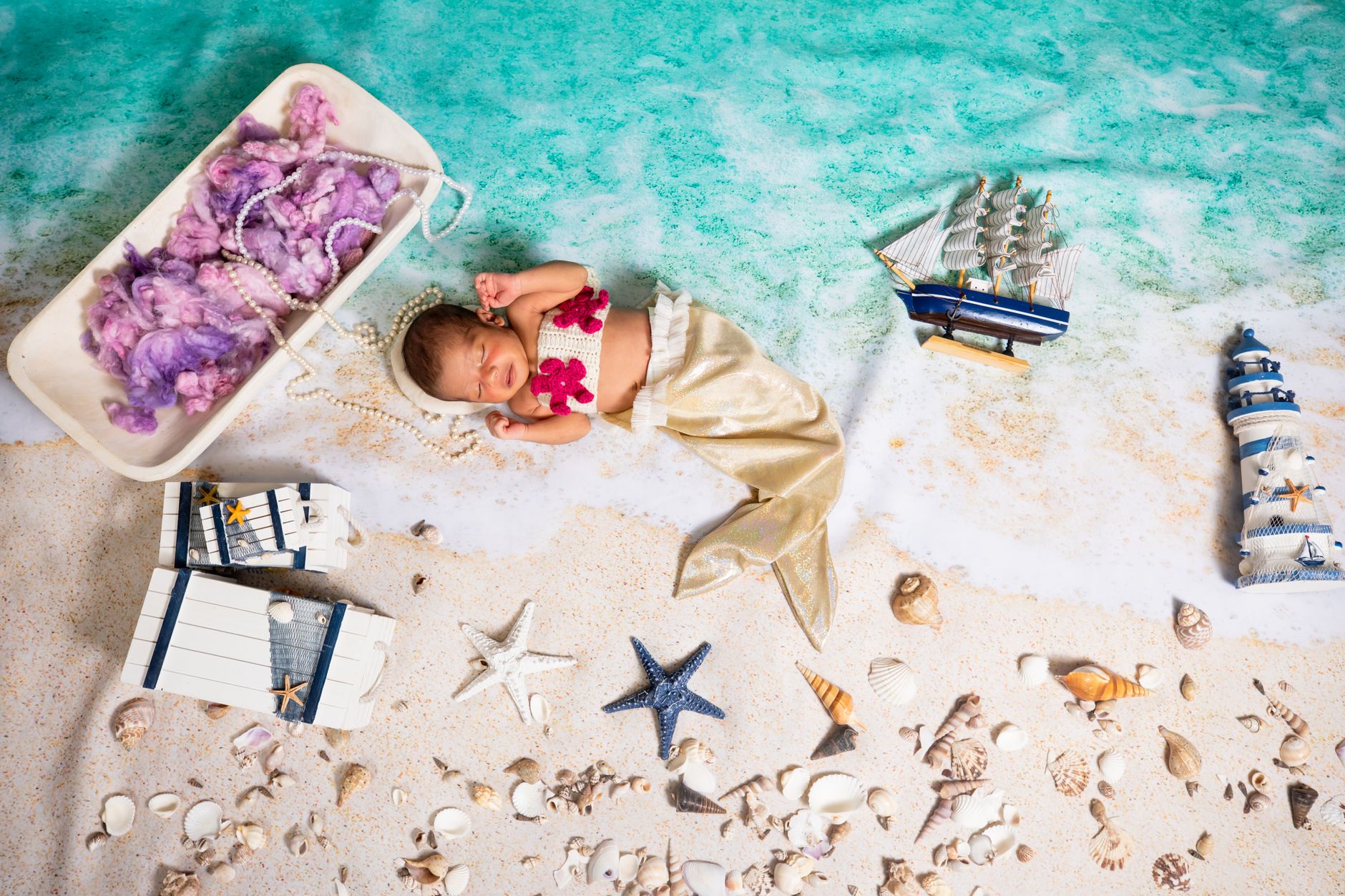
Props play an important role in newborn photography, adding character and aesthetics to the shots. Options like baskets, hats, and lace wraps are often chosen for their cute appearance and versatility for different styles of photographs.
Ensure that the props are safe and do not pose a risk to the baby. Soft baskets or pillows should have a stable base and not be too high to avoid the risk of falls.
Wooden elements, if used, should have soft edges and be securely fastened or supported.
Planning the Photo Session
A newborn session requires precise planning to run smoothly and without stress. Start by preparing a schedule for about 2-3 hours, including breaks for feeding and changing the baby, allowing for refreshment and reducing the risk of discomfort for the little one.
A typical session involves shooting for about 45 minutes after each feeding. It's wise to schedule breaks between shots, as they may be necessary to soothe the baby.
Creating a comfortable atmosphere is crucial—gentle white noise from a device, soft music, or nature sounds can help in calming and relaxing both the baby and the parents.
Post-Processing Newborn Photos
Post-processing newborn photos is a delicate process that involves subtly enhancing the appearance of the photographs without disturbing the baby's natural charm. Techniques such as removing skin redness using HSL adjustments or gentle retouching of minor imperfections are recommended.
Strive to maintain balance in skin tones by using subtle color grading towards warm pastels, which add coziness and softness to the images.
After processing, save electronic copies of the photos in a gallery and prepare 5-10 high-resolution files ready for print.

Photographer's Attitude and Professionalism
The professionalism of the photographer is not just the skill of taking photos but also the care for the trust and comfort of the client. The photographer's attitude in the studio is immensely significant—a calm and confident tone, attention to detail, and the ability to respond to the needs of new parents.
The photographer should be ready to collaborate with the parents, informing them of each step during the session and considering their suggestions or concerns. This approach builds trust and creates a positive atmosphere, which translates into better session results.
Good communication with parents is also an investment in future referrals and the growth of your business.
Utilizing Technology in Newborn Photography
Modern technology can greatly ease the process of newborn photography. Using apps to generate white noise or soft music can facilitate the session, and mobile photo editing apps significantly speed up the post-production process.
Thanks to special smartphone functions, you can easily track the session schedule or monitor the temperature using available apps.
It's also worth investing in solid gallery management software, as it simplifies the presentation of photos to clients and ensures their safe storage. /cennik, /faq
Pay Attention to the Details of the Photography Plan
Every newborn session is different, making prior planning extremely important. Ensure that you have carefully considered all elements—from setting the lighting to arranging props and scheduling actions during the session.
Systematically work on your portfolio, analyzing each shot for improvement possibilities. This approach allows you to grow and gain client trust as well as develop your artistic skills.
Don't forget about continuous self-education—by participating in workshops and reading specialized publications. Knowledge is the most important key to success for a photographer.
How Picvelo Can Help
Picvelo offers excellent solutions for managing newborn photo galleries. Our platform allows easy sharing of photos with clients, adding watermarks, and securely storing files. With Picvelo, you can focus on your passion for creation while we take care of the comfortable sharing of your work.
Summary
Newborn photography is a challenge that requires professionalism and care. By applying the right techniques and paying attention to details, you will ensure safety and comfort for the little ones. Invest time in preparation, and the sessions will be a success for both you and your clients. Don’t hesitate—act and develop your skills in this unique field of photography.
FAQ
What are the ideal temperatures in the studio for newborns?
The optimal temperature in the photography studio for newborns is 25-28°C. This is the range in which the baby feels comfortable and does not overheat. Monitoring this temperature is key to ensuring the right conditions during the session.
Can I leave a newborn alone on an elevated surface?
No, never leave a newborn alone on an elevated surface. Always ensure the presence of a parent or assistant for the baby's safety. Even a moment of inattention can lead to dangerous situations.
What positions are safe for newborns during the session?
Safe positions include the side pose and the 'taco' position. Avoid complicated poses like 'froggy' unless you have considerable experience working with newborns and know techniques that ensure safety.
What equipment is best for newborn photography?
For newborn photography, it's best to use continuous LED lights, low tripods, and DSLRs or mirrorless cameras with an aperture in the range of f/2.8 - f/5.6. This type of equipment allows capturing delicate details and creating a soft background.
What are composite techniques in newborn photography?
Composite techniques involve combining several shots into one to create the illusion of a complex pose for the baby. For example, one frame has the parent holding the newborn, and another does not—both are then combined in a photo editing program.
What props can be used in newborn photography?
Popular props in newborn photography include baskets, hats, lace wraps, and soft pillows. All must be safe, stable, and appropriate for the delicate skin of the newborn.