
Ordering business headshots for an entire team is a challenge that requires not only technical expertise but also organizational skills. Working with large clients, where the photos are intended for marketing or HR departments, carries significant responsibility. In this article, we will share tips on how to provide consistent and professional team photos in a way that will encourage the client to return to you for future collaborations. You'll learn how to organize a photo shoot, set a schedule, and what tools and strategies to employ to meet corporate expectations.
Preparing for the Photo Session
Organizing a photo session for a team requires careful preparation. A key element is planning the logistics, which is based on a schedule. It's worthwhile to propose a detailed plan to the client, dividing it into 5-10 minute slots for each employee, allowing the session to run smoothly. It's also a good idea to meet in advance with the person responsible at the company to discuss details such as background choice, lighting preferences, and photo style. This is also an ideal time to present your vision and ensure it aligns with the company's expectations.
Optimal Equipment Selection
Professional photos require the right equipment. For business headshots, it's best to choose a mirrorless or DSLR camera with a 50-85 mm lens. Such lenses work well for portraits due to the shallower depth of field, allowing the model to be separated from the background. It's also beneficial to equip yourself with a softbox (e.g., 80 cm) to provide soft, natural light perfect for portraits. Tripods and neutral-colored backgrounds—white, gray, or branded—will also be helpful.
Consistency in Editing
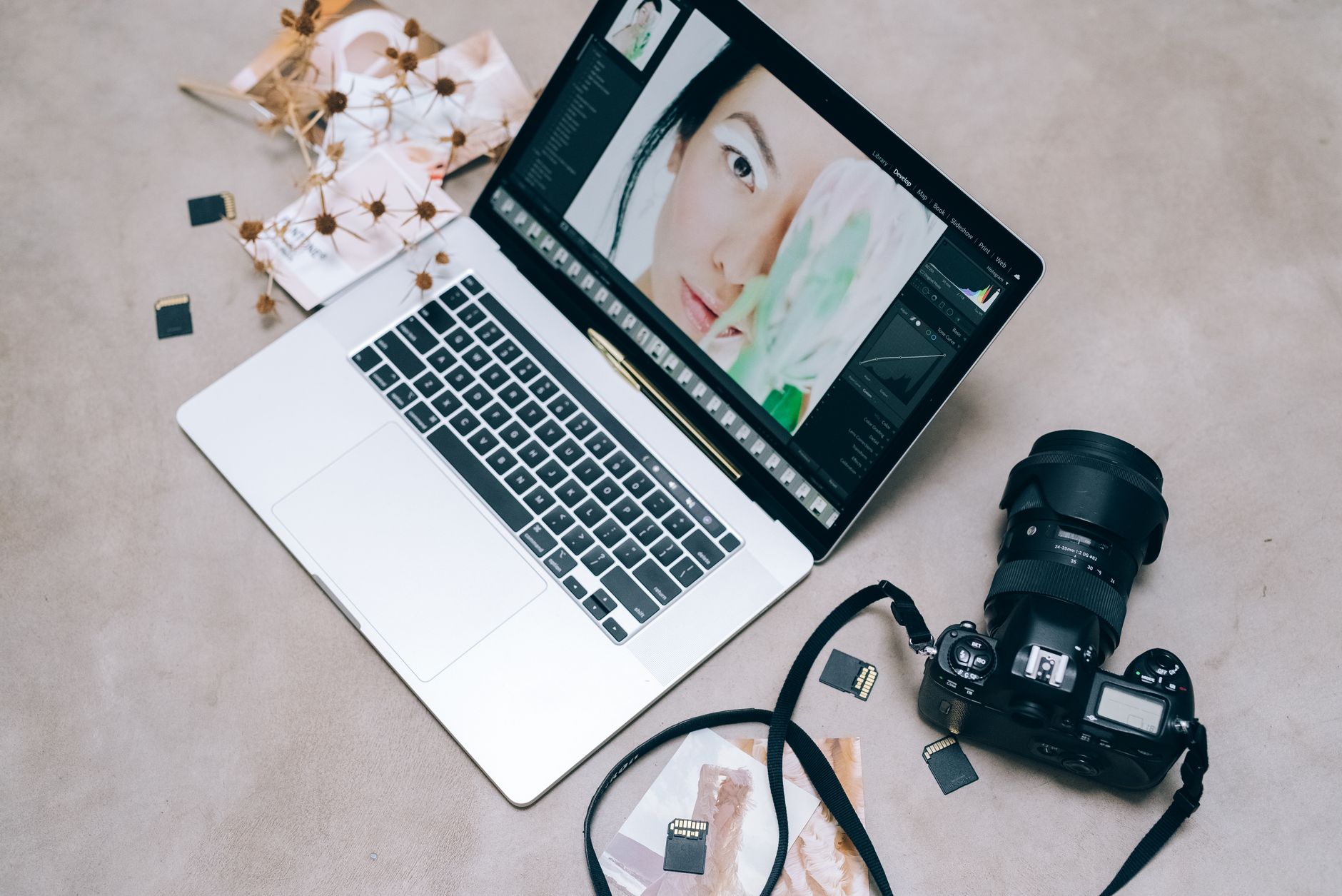
One of the important aspects of a business session is the visual consistency of the photos. To achieve this, it's worth using editing presets. They will ensure a uniform appearance for every photo, making the entire series look professional and aesthetically pleasing. For example, choose a preset that matches the client's visual identity and apply it to all photos. This not only speeds up editing but also gives the photographer control over the final outcome.
Client Galleries and Proofing
A key stage in working with a client is the selection and approval of shots. For large companies, client galleries are invaluable, providing quick and convenient access to photos for marketing or HR departments. It's worth using platforms like client photo selection that offer marking, proofing, and multi-access features for more decision-makers. This solution not only streamlines the approval process but also builds the photographer's image as a professional.
Format Matching and Branding Delivery
Business headshots should be delivered in various formats—from social media versions to website formats and printed materials. A good workflow involves delivering photos in square (e.g., LinkedIn), rectangular (websites), and larger formats (print). Moreover, the gallery of delivered photographs should reflect the client's branding—this can be achieved by using logos or corporate colors. This approach increases professionalism and client satisfaction.
Invoicing and Formalities
Collaborating with a corporate client requires not only professional service during and after the session but also a reliable approach to invoicing. Billing for photographic services should be transparent and consistent with prior agreements—a good idea is to include a link to the gallery with finished photos directly in the email with the invoice. This solution integrates the final stage of client service and increases their satisfaction. Systems that integrate payment functions and online access to materials will also be helpful here.

Turning Assignments into Ongoing Collaborations
Professional handling of corporate clients, offering flexibility in photo choices, adapting to industry specifics, and fast delivery can transform a one-time assignment into long-term collaboration. Features like the ability to create subsequent sessions when team changes occur or continuous access to galleries for new employees are crucial for building business relationships. Photographers who offer additional services are more appealing to companies, which can lead to future projects.
Challenges and How to Overcome Them
During business sessions, various challenges may arise, such as tight schedules or unexpected technical issues. Therefore, it’s wise to have a backup plan, like an additional set of equipment in case of failure. Stress can also affect the subjects, often not accustomed to such sessions. In such cases, creating a friendly atmosphere and having a brief chat with the model before starting the photographs can reduce tension and increase comfort.
How Picvelo Can Help
How can Picvelo help with photo delivery? With our platform, you can create professional client galleries that allow easy access and selection of photos. Protect your work with watermarks. Picvelo also offers analytics to help understand interest in the photographs. Learn more at pricing.
Summary
Executing business sessions for teams is a challenge, but also an opportunity for long-term collaboration with corporate clients. With proper planning, leveraging advanced tools like client photo selection, and attention to operational details, you can deliver excellent results and build your brand as a renowned professional.
FAQ
How much does it cost?
The price for a business session depends on many factors, such as the number of portraits, the extent of editing, or the client's delivery requirements. Typically, prices start from a few hundred zlotys per person.
Is it worth investing in portrait equipment?
Professional equipment is crucial in portrait photography as it provides the necessary image quality and control over lighting. Investing in 50-85 mm lenses and softbox lights is definitely worth it.
How often should team photos be updated?
It's recommended to update team photos at least every 12-24 months, especially with staff turnover. Refreshing photos during significant changes in the company can also be a good idea.
What is better: one background or different ones for each?
Uniformity of backgrounds ensures visual consistency in the series of portraits, which is usually preferred in business team sessions. Different backgrounds may only be used if specific client needs require it.
How long does photo editing take?
Editing time depends on the number of photos and the complexity of the editing. For a small team, this might take a few days, while for a larger project, it could extend to a week.
How to choose appropriate lighting?
Soft, diffused lighting is achieved using softboxes, which is ideal for portraits. The most important thing is to ensure consistent lighting throughout the session, which can be achieved by setting it up once at the beginning.
Comments (0)
No comments yet. Be the first!